Making Room
Controlled abundance and the expanding silhouette of SS26

Sitting on the sofa, watching Givenchy’s Spring/Summer 2026 show unfold, I paused on a look engineered for spectacle — a sliver of leather cut into the shape of a bra beneath an otherwise immaculate blazer. I found myself asking, almost instinctively, who is that actually for?
My husband, who has spent much of his career in this industry, didn’t hesitate. “It’s not for you,” he said plainly. “Fashion is designed with women in their twenties in mind.”
I dismissed it immediately. The idea that runway belongs to a single age feels reductive. And yet, for a moment, I felt the sting of it — not because I believed him, but because I recognised how often that assumption circulates. That fashion is designed with youth as its default. That women beyond their twenties are expected to extract what they can, rather than see themselves reflected.
But as the collections unfolded, that narrative began to loosen.
Yes, there were moments of provocation — exposed torsos, abbreviated silhouettes, gestures clearly calibrated to youth. Fashion has always made room for bravado. But to interpret the season through those fragments alone would be to miss the wider recalibration taking place.
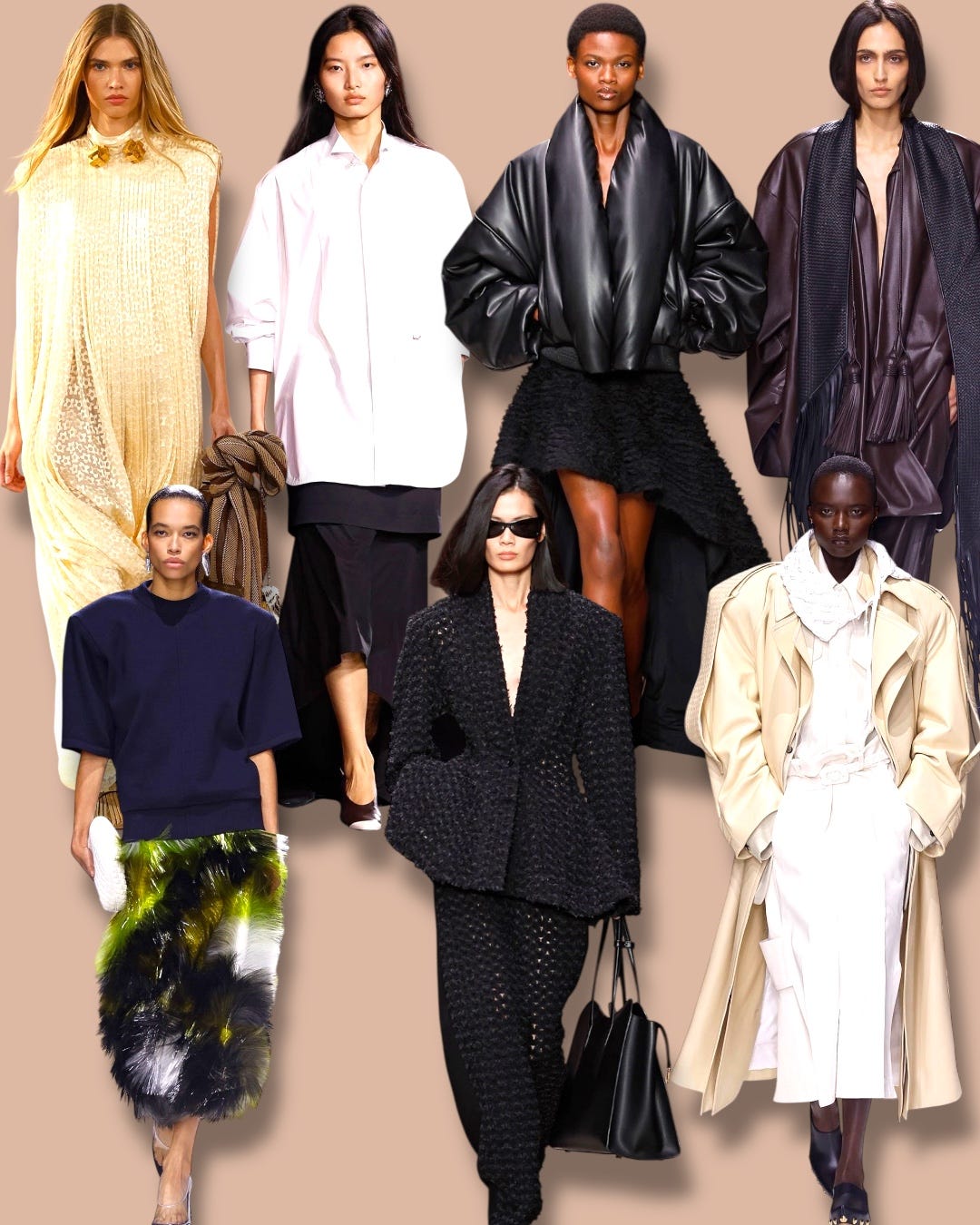
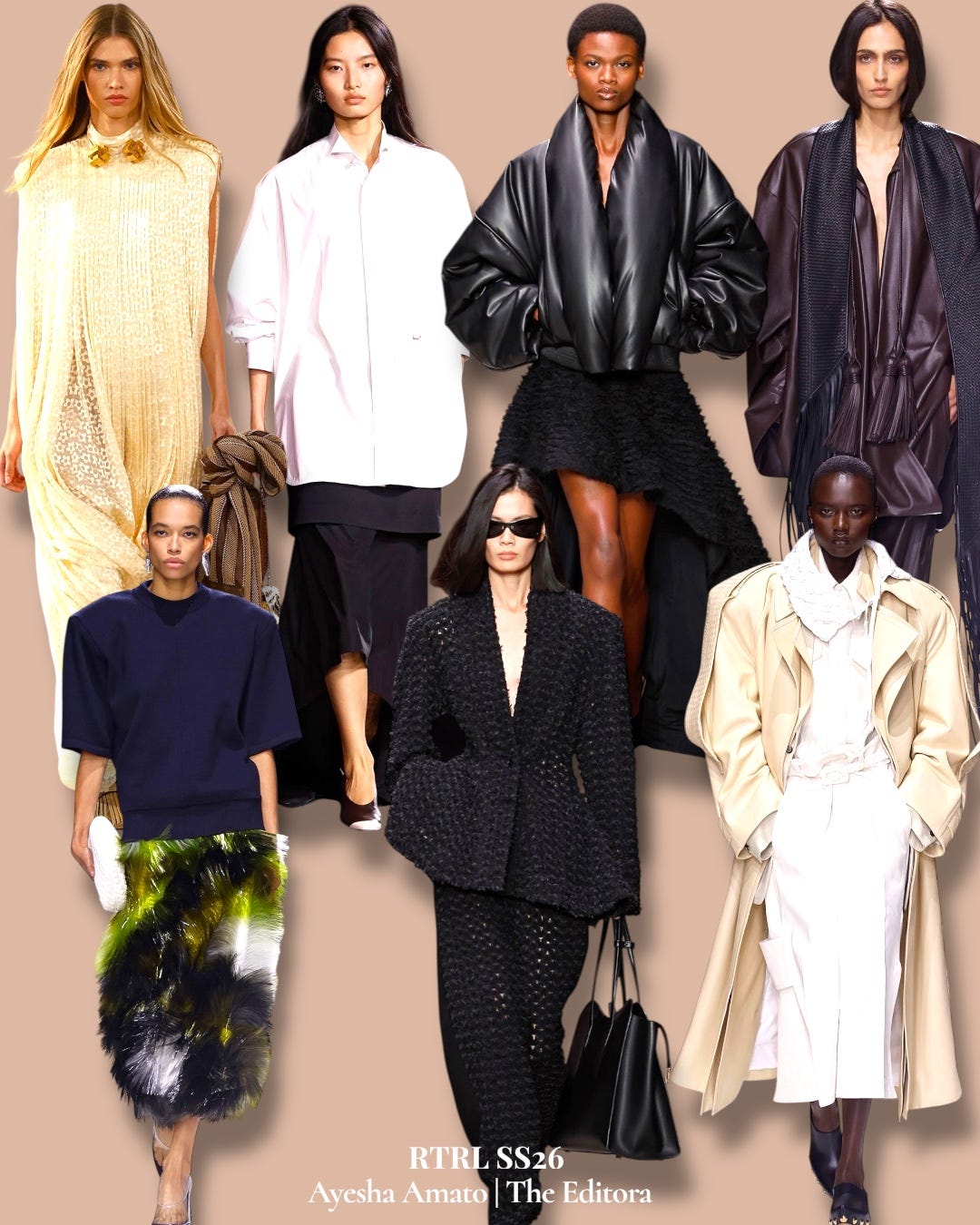
The shift was visible in the way fabric behaved. It fell. It folded. It moved. Drape returned not as ornament but as articulation of space. Leather appeared supple, moulded rather than armoured. Drop waists lengthened the torso without demanding contraction. Shirts were layered loosely over skirts, untethered from the waist, creating coverage without heaviness.
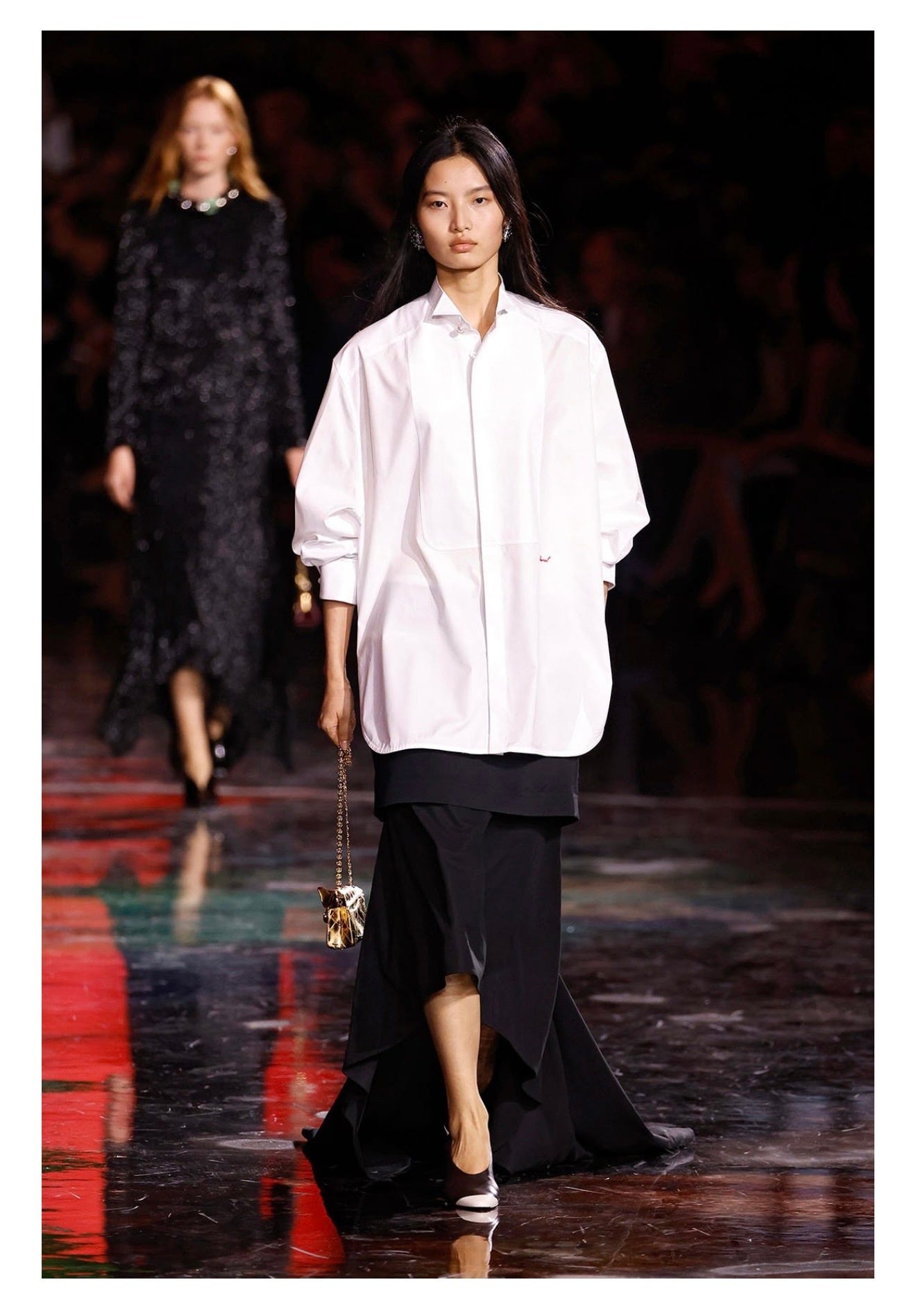
Chanel articulated this most clearly through drop-waist dresses that lengthened rather than cinched, and through shirting layered loosely over cascading, asymmetric skirts. The white shirt, long associated with discipline, functioned less as uniform and more as framing — a way of structuring volume without suppressing it.
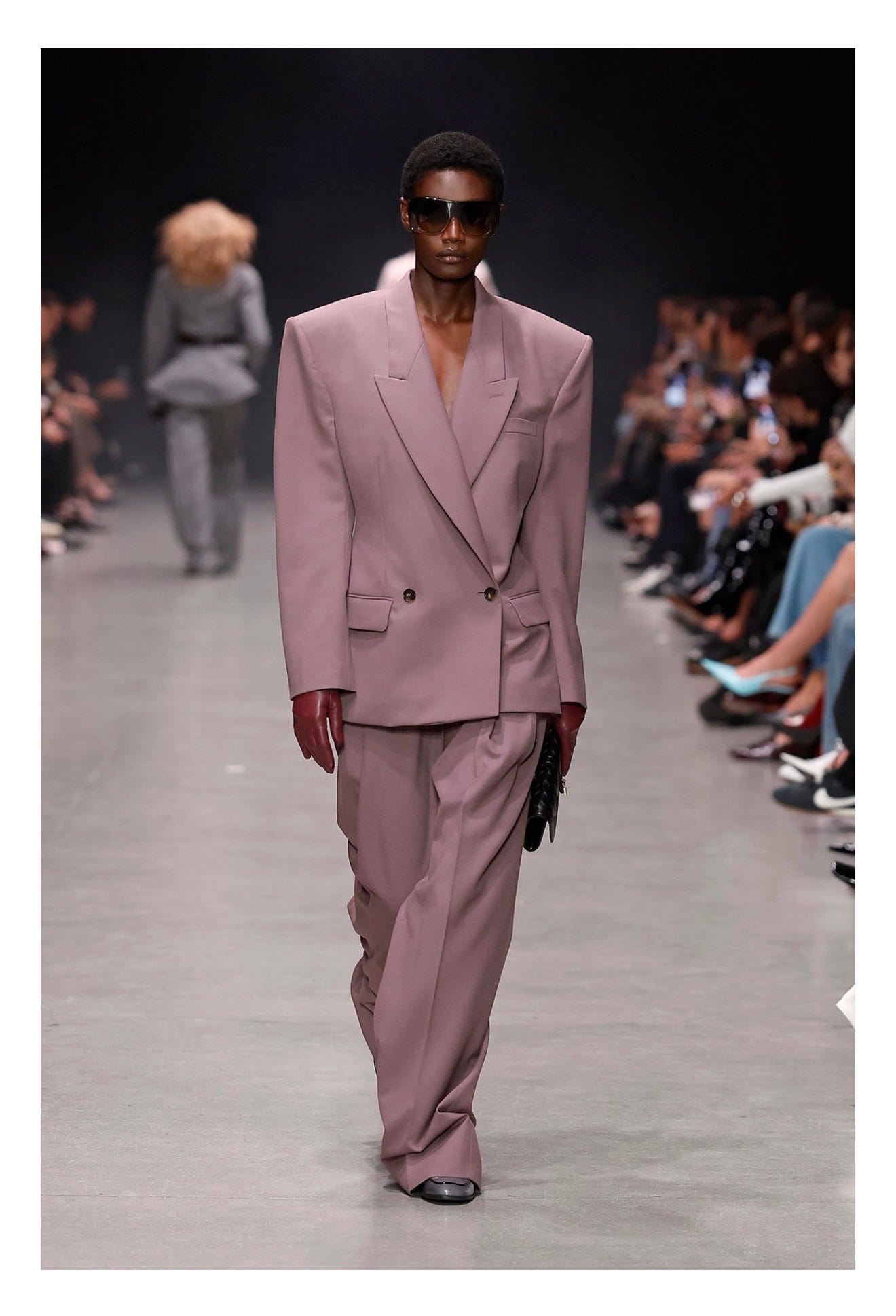
At Stella McCartney, tailoring carried that recalibration further. Shoulders widened with quiet authority, then tapered intelligently before releasing into fluid, pleated trousers. It carried authority without rigidity — a silhouette that shaped space around the body rather than compressing it.
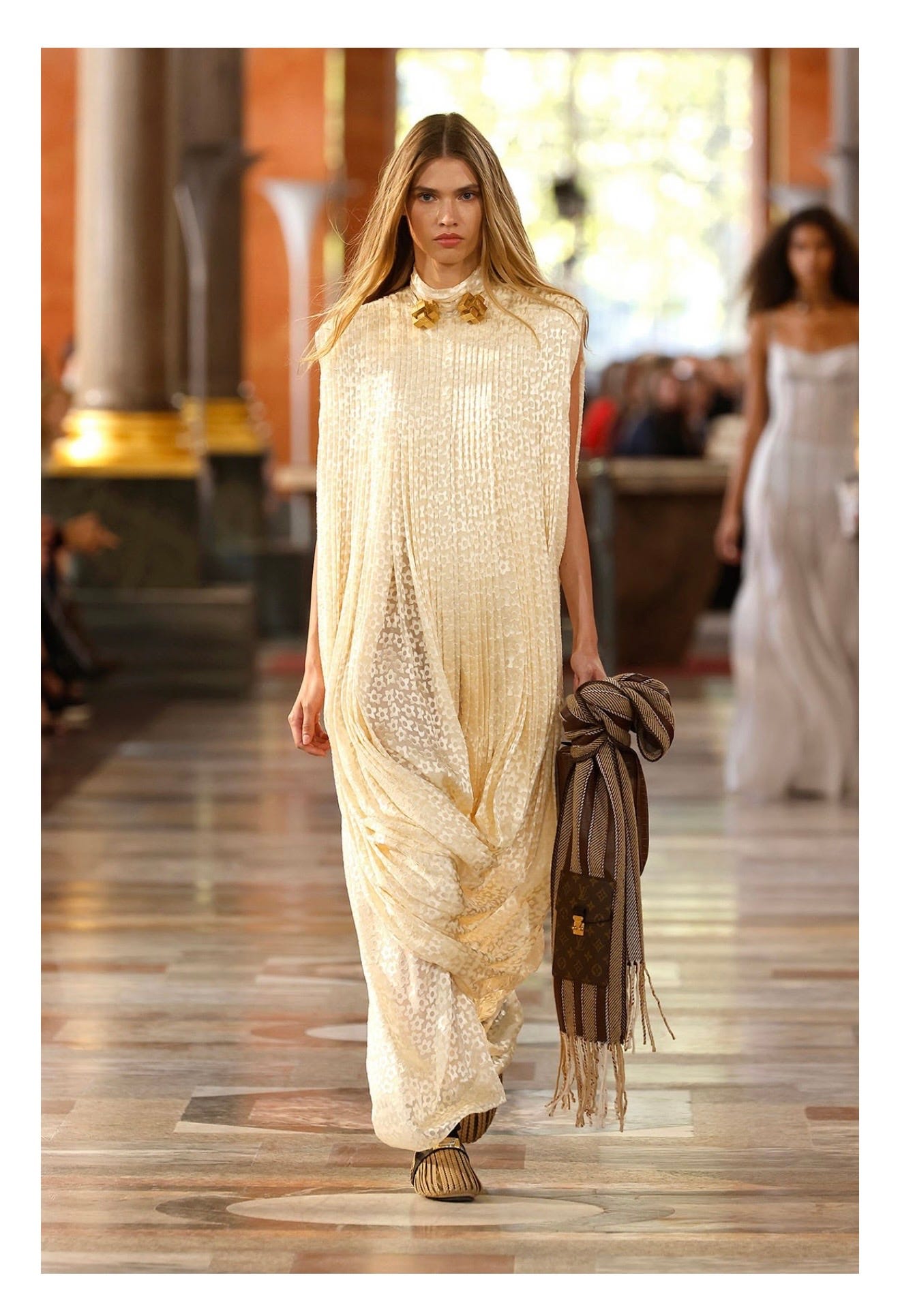
The movement extended well beyond shirting and tailoring. At Louis Vuitton, column dresses hung from structured shoulders before dissolving into folds that gathered and released around the shin, fabric bubbling outward before dropping to the floor. Lampshade skirts and high–low bubble hems introduced volume not as exaggeration, but as intention. Even corseted tops were softened by drape and paired with fluid, wide trousers, the tension between structure and movement resolved in favour of ease.
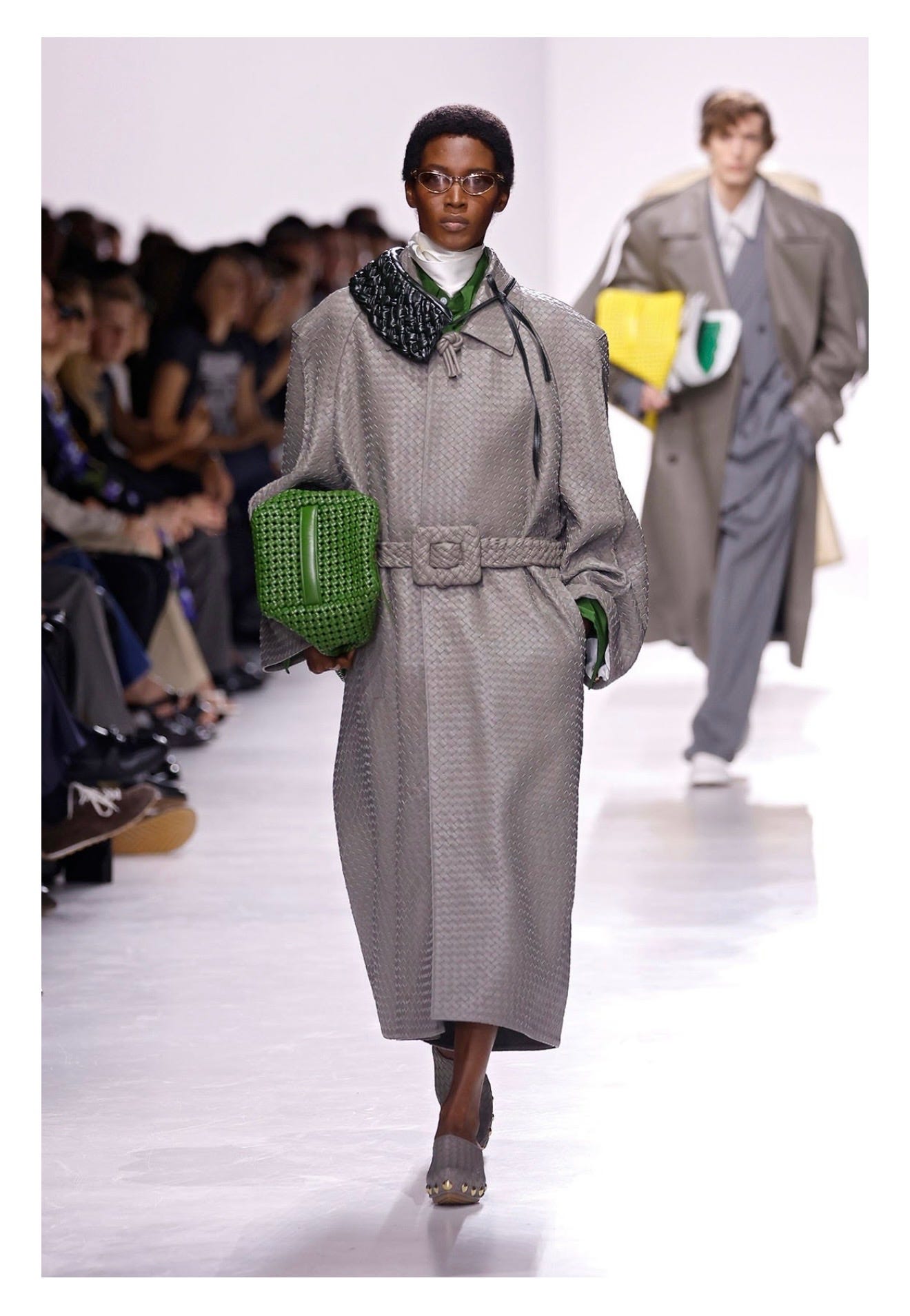
Bottega Veneta approached leather in similarly unexpected fashion. Trenches and overcoats — some woven in the house’s signature technique — carried breadth through the shoulder and sleeve, yet moved with remarkable fluidity. The leather folded, swayed and pooled. Butter-yellow coats with elongated epaulettes and dove-grey woven trenches suggested power, but without stiffness.
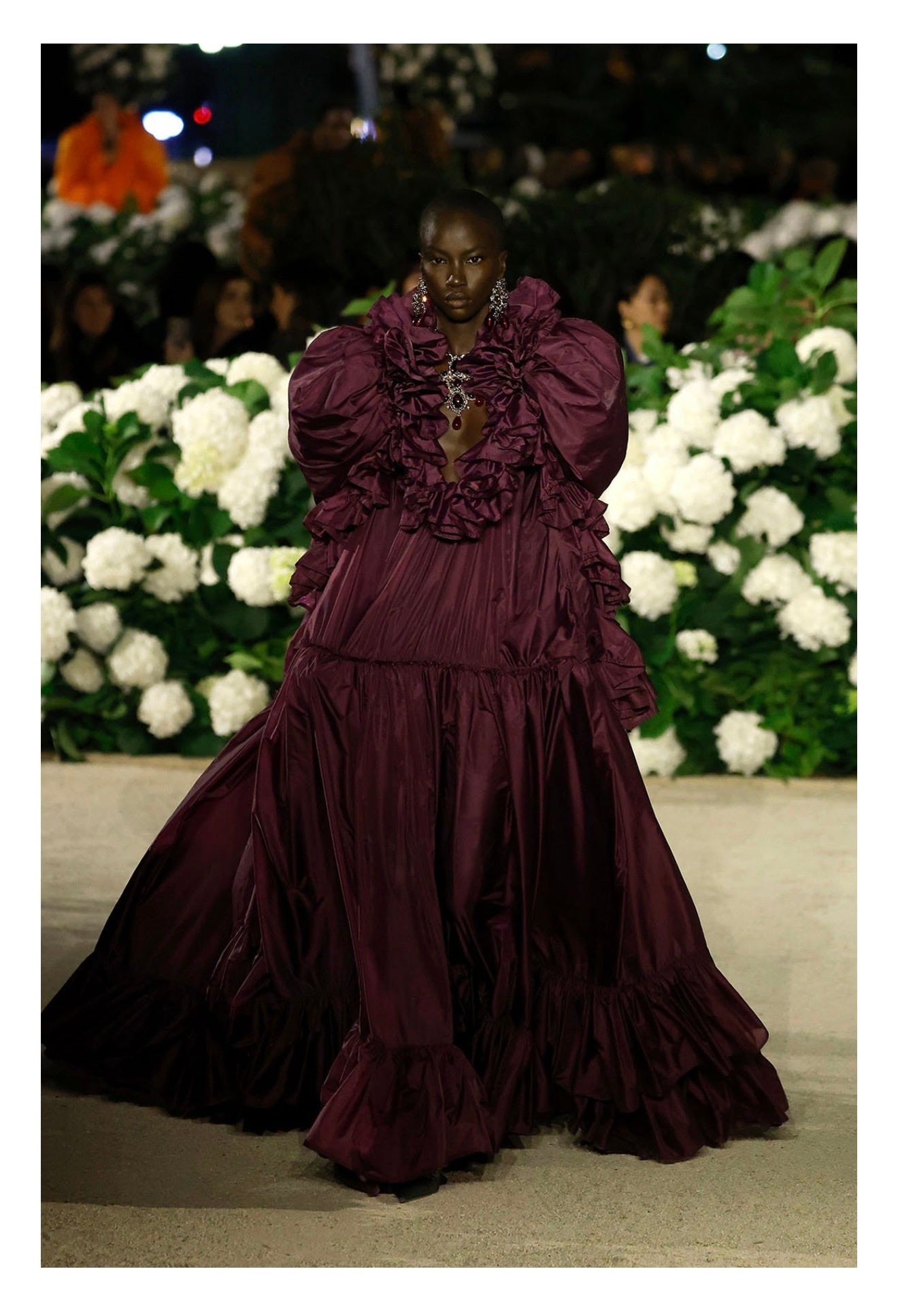
And at Saint Laurent, the season culminated in billowing dresses that caught the air as they moved — fabric cascading behind the body rather than clinging to it. Drama, yes, but drama carried by movement.
Across houses, the message cohered. This was not a return to severity. It was an embrace of fabric — of folds, gathering, ballooning, pleating and draping — material allowed to articulate space around the body. The effect was controlled abundance rather than clean-lined precision.
For seasons, sleekness has operated as shorthand for sophistication — clean lines, disciplined silhouettes, visual efficiency. What distinguishes this moment is not the abandonment of refinement, but its expansion. Precision remains, but it no longer insists upon restraint. Volume is permitted.
There is something culturally resonant in that.
Spring and summer have long carried an unspoken pressure — as layers fall away, the body becomes newly visible. Too often, runway has amplified that visibility through compression or spectacle. This season proposes something different. It acknowledges that bodies evolve, that life complicates, that movement is constant.
Clothing that accommodates that reality does not dilute fashion’s potency. It strengthens it. It recognises a wearer who requires function yet refuses to relinquish fashion — who moves through work, family, travel, ambition and change without consenting to be streamlined into invisibility.
Which makes that sofa-side exchange feel quietly revealing.
The question is no longer who that look was designed to exclude.
The question is who fashion is finally prepared to accommodate.
And this season, the answer feels expansive.